The High Price of Fear: Why Avoiding the Dentist Costs More Than You Think
By Mandy Davidson on 1/21/2026

We know you’d rather be anywhere else. The waiting room of a dental office ranks somewhere between the DMV and a tax audit on most people’s list of favorite places. And honestly? That makes complete sense.
The needle. The drill. The surprise bill. These three things keep more people out of dental chairs than any actual dental problem ever could. If you’ve been putting off that appointment for months (or years), you’re not alone. Roughly 36% of people experience some level of dental anxiety, and about 12% have such severe fear that they avoid care entirely.
Here’s the thing nobody tells you: that anxiety is actually the most expensive part of dentistry. The fear itself costs more than the treatment ever would.
The Rule of Decay (Or Why Waiting Always Costs More)
Teeth don’t heal themselves. Unlike a cut on your skin or a pulled muscle, dental problems only move in one direction. That tiny cavity you’re ignoring right now? It’s growing. Slowly, quietly, and expensively.
Think of it like a leaky roof. A small patch job costs a few hundred dollars. Ignore it for a year, and suddenly you’re replacing ceiling drywall. Wait another year, and you’re dealing with mold remediation and structural damage.
Dental decay follows the same pattern. A filling caught early runs around $200. Let that same cavity spread to the nerve, and you’re looking at a root canal for $1,200 or more. If the tooth becomes unsaveable, an extraction and implant can run $4,000 to $6,000.
The math is brutal but simple: every year you wait, the cost multiplies. The filling you’re avoiding today becomes the crown you can’t afford next year.
Financial Phobia Is Real
Let’s talk about the money fear, because it’s just as powerful as the physical fear for many people. The dread of sitting down and hearing a number you weren’t expecting keeps plenty of folks from ever making that first call.
Modern dental practices have figured this out. At our office, we provide clear estimates before any treatment starts. No surprises. No hidden fees appearing on your bill after the fact. You know exactly what you’re agreeing to before we pick up a single instrument.
For patients without insurance, membership plans have changed the game. Unlike traditional insurance with its waiting periods, annual maximums, and mysterious denial letters, a dental membership plan gives you straightforward pricing. You pay a flat monthly or annual fee, and your preventive care is covered. Need additional work? You get it at a reduced rate. No claims to file, no pre-authorizations to wait for, no fine print that somehow excludes exactly what you need.
The transparency alone removes a massive source of anxiety. When you know what something costs before you commit, the fear of the unknown bill disappears.
The Needle Doesn’t Have to Hurt
Now for the physical fear. The one that makes your palms sweat just reading about it.
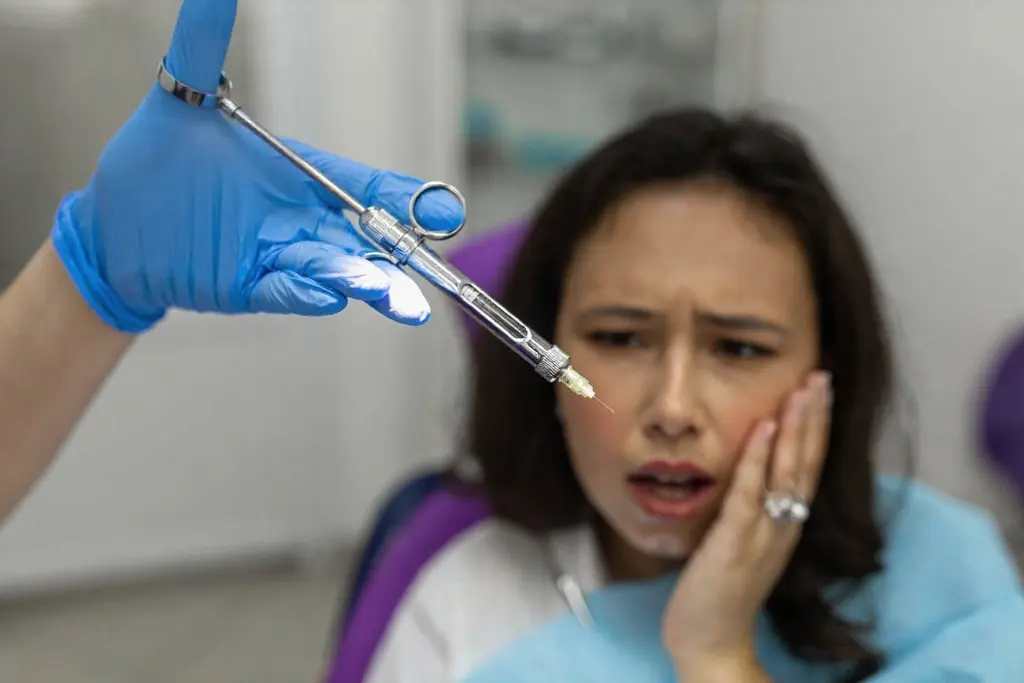
Most people who fear “the needle” are actually afraid of something else entirely. Research shows that the pain from dental injections comes primarily from the pressure of the anesthetic fluid entering the tissue too quickly. The needle itself? Barely registers for most patients, especially with modern topical numbing gels applied first.
Computer-assisted anesthesia systems (sometimes called “The Wand”) have revolutionized this process. These devices look more like a pen than a syringe, which helps visually. More importantly, they deliver anesthetic at a computer-controlled rate, staying below your pain threshold the entire time. The fluid drips in so slowly that many patients don’t feel anything at all.
Vibration devices work on a fascinating principle called gate control theory. Your brain can only process one sensation at a time. When a small vibrating device is placed on the gum during an injection, the vibration signal travels faster along nerve fibers than pain signals do. Your brain registers “vibration” and essentially ignores the injection happening right next to it.
These aren’t gimmicks or marketing tricks. They’re evidence-based tools that genuinely change the experience of dental care.
Your Brain Can Turn Off Dental Pain
Beyond the technology, there are psychological techniques that work remarkably well. The best part? You can use them yourself, starting today.
The stop signal might be the most powerful tool in anxious dentistry. Before any procedure begins, you and your dentist agree on a signal (usually raising your left hand) that means “stop immediately.” Knowing you can halt everything at any moment actually raises your pain threshold. When you feel safe and in control, you physically experience less discomfort.
This isn’t just feel-good advice. Studies show that patients who feel in control during dental procedures report significantly lower pain levels than those who feel powerless. The Dental Fear Central organization has documented how simply knowing you can walk out at any time makes people more willing to stay.
Box breathing (also called square breathing or four-square breathing) gives you another tool you can use right in the chair. Here’s how it works:
- Sit back in the chair with your feet flat on the floor
- Close your eyes and breathe in through your nose while counting slowly to four, feeling the air fill your lungs
- Hold your breath for four seconds (don’t clamp your mouth or nose shut, just pause)
- Slowly exhale for four seconds
- Wait four seconds before starting again
- Repeat at least three times, or for about four minutes until you feel calm
If counting to four feels too long at first, start with three. Once you get comfortable, you can extend to five or six seconds per phase.
This technique forces your nervous system out of fight-or-flight mode and into rest-and-digest. When your body perceives a threat (like a dental appointment), it releases adrenaline and noradrenaline, making your heart race and your breathing speed up. Box breathing interrupts that cascade. Research confirms it reduces cortisol (the stress hormone) and increases focus and calm.

Soldiers and police officers use box breathing in high-stress situations. If it works for them in actual danger, it can absolutely work in a dental chair. Watch a quick video demonstration of box breathing.
The Tell-Show-Do Approach
Fear of the unknown amplifies every other fear. When you don’t know what’s coming next, your brain fills in the blanks with worst-case scenarios.
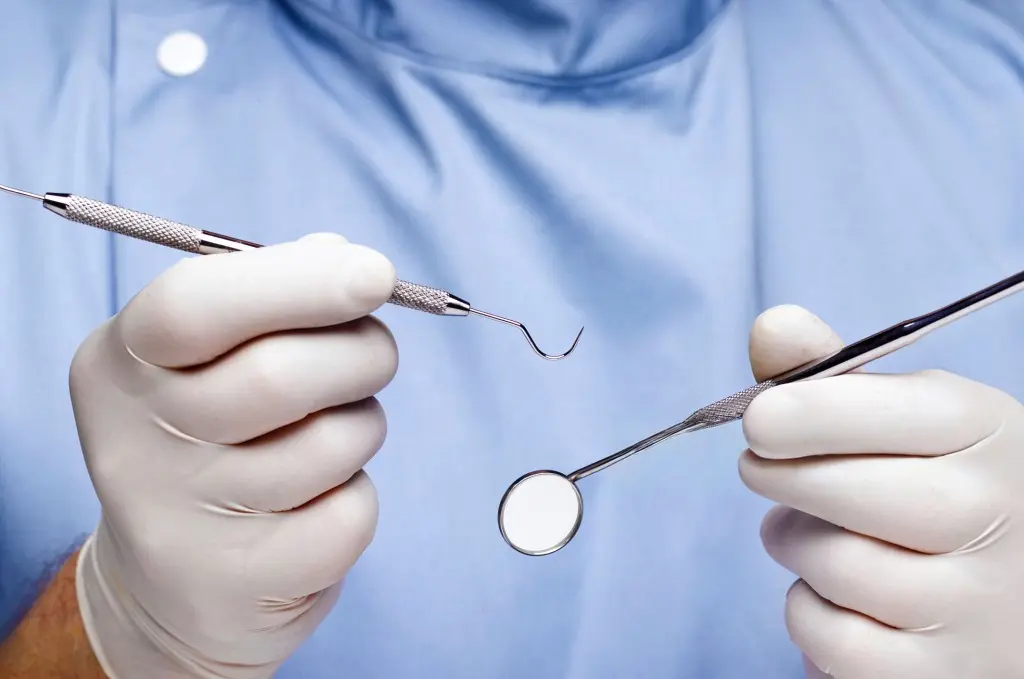
Good dental practices use a technique called “tell-show-do.” Before anything happens, your dentist tells you exactly what they’re about to do. Then they show you the instrument or demonstrate on a model. Only then do they actually perform the procedure.
This removes the “jump scare” element that makes dental visits so stressful for anxious patients. No surprises. No sudden movements. No unexplained sensations. You know what’s happening before it happens, and that predictability transforms the experience.
Breaking the Cycle
Dental anxiety creates a vicious cycle. You avoid the dentist because you’re afraid. Problems develop and worsen because you’re not getting regular care. When you finally have to go (usually because something hurts badly enough to override the fear), the treatment is more extensive and more expensive than it would have been. This confirms your belief that dental visits are terrible, and the cycle continues.
Breaking this cycle starts with one appointment. Not a cleaning, not a procedure. Just a conversation. Come in, meet the team, sit in the chair without anything happening. Ask questions. Voice your fears out loud. A good dental practice will listen and work with you to create a plan that respects your anxiety while still protecting your oral health.
The fear is real. We get it. But the cost of that fear, both financial and physical, is higher than the cost of facing it. Modern dentistry has tools your parents never had access to. Techniques that genuinely work. And practitioners who understand that the most important part of their job isn’t fixing teeth. It’s making you feel safe enough to let them try.
Your next appointment doesn’t have to be the one you’ve been dreading. Book a consultation and let’s talk about what comfortable dental care actually looks like.