What Counts as a Dental Emergency and What the ER Will Never Fix
By Dr. Lok on 5/10/2026
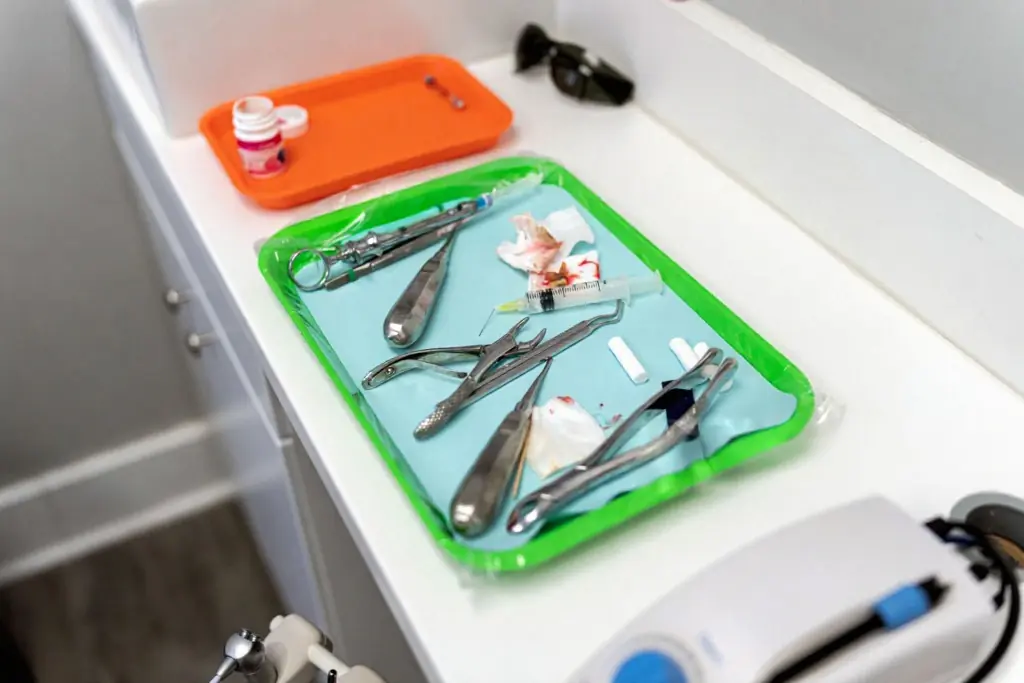
A sharper guide to tooth knock-outs, swollen jaws, and the kind of pain that sends people to a Toronto ER at two in the morning when a dentist could have solved the problem in twenty minutes.
The tooth on the napkin
At a downtown Toronto hospital last year, a patient walked into triage carrying his own front tooth in a paper napkin. He had taken a hockey puck to the mouth ninety minutes earlier, rinsed the tooth under the bathroom tap, wrapped it up, and driven across the city to find help. The triage nurse handled him kindly. The tooth was already dead.
That hour and a half of well-meaning effort cost him a permanent incisor. Almost everything about what he did was wrong. He should have called a dentist instead of going to the emergency department. He should never have scrubbed the root. He should have dropped the tooth into a glass of cold milk within five minutes. By the time he reached the hospital, the people best equipped to help him were not on staff.
This is the central confusion of dental emergencies in Canada. The general public has been trained by decades of medical television to assume the emergency room is a universal safety net, but for most acute dental problems, the ER is the wrong building. The genuine dental emergencies, the ones where minutes actually matter, usually involve preserving tissue rather than stabilizing a patient. And the conditions that do require a hospital tend to be the ones people fail to recognize as dental at all.
The five-minute tooth
Knock out a permanent tooth, what dentists call avulsion, and the clock that matters is far shorter than most people imagine. The periodontal ligament, a microscopic web of cells that anchors a tooth to bone, begins dying as soon as the root leaves its socket. Replanting within five minutes gives the ligament its best chance of survival. Replant within an hour and the odds drop sharply. A retrospective study published in Dental Traumatology in 2023 found that 71% of replanted teeth that ultimately failed had been out of the socket for more than an hour [1]. Survival at five and a half years across all replanted teeth hovers around 50% [2].
The 2020 guidelines from the International Association of Dental Traumatology recommend something so specific that most patients have never heard of it. If you can replant the tooth yourself, do it gently, by the crown, never touching the root. If you cannot, drop the tooth into cold milk. Milk is not magical, but its osmolality and pH preserve periodontal cells far better than water, which actively bursts them. Hank’s Balanced Salt Solution, sold in pharmacies as Save-A-Tooth kits, keeps the ligament viable for up to 72 hours, where milk works for about six [3]. Saliva, including the patient’s own, is acceptable backup. Tap water is not.
And the part that grinds dentists the most: nobody should be scrubbing the root. The fragile fibres clinging to that surface are what knit the tooth back into bone. Wiping them off with a paper towel is the cellular equivalent of sanding the root smooth. The instinct to clean a dirty tooth before putting it back is exactly the wrong reflex, and it explains a meaningful fraction of the failed replantations that show up at follow-up appointments months later.
The infection nobody takes seriously enough
Walk into any dentist’s office in Toronto and the most common urgent call of the week will be some version of “my tooth is throbbing and the side of my face is swelling.” That is a dental abscess, and it is where modern guidelines have moved hardest against patient intuition. For decades, the standard reflex, for patients and for many general physicians alike, was antibiotics. In 2019, the American Dental Association issued an evidence-based guideline, later endorsed by the American College of Emergency Physicians, recommending against antibiotics for most pulpal and periapical infections in immunocompetent adults [4]. The treatment that actually clears the infection is mechanical: drainage, pulpotomy, or root canal therapy. Antibiotics without that source control are a holding pattern, and they breed resistance without curing anything.
The exception matters, and it is the part patients should commit to memory. Antibiotics belong in the picture once the infection becomes systemic; fever, malaise, swelling that crosses anatomical planes, difficulty swallowing, or any sense that the face is no longer behaving like a face. The first-line regimen for an immunocompetent adult is oral amoxicillin 500 mg three times daily, for three to seven days, stopped 24 hours after symptoms resolve. Anything longer than that is overprescribing, full stop.
What patients miss is that a swollen jaw without systemic symptoms still needs urgent dental treatment. It just does not need antibiotics. The tooth has to be opened, the pus has to drain, and the source has to be dealt with. Waiting for a Z-pack to “see if it gets better” is how a manageable abscess turns into something much worse. Some of the most dangerous infections begin as the patient who finally found a walk-in clinic, accepted a prescription, and then assumed the problem was being treated.
The one dental infection that belongs in the ER
There is exactly one dental emergency that uniformly justifies a hospital trip, and most people have never heard its name. Ludwig’s angina is a rapidly spreading infection of the floor of the mouth, almost always originating from a lower molar, that can swell the tongue and submandibular space until the airway closes. Before antibiotics it killed more than half the patients who developed it. Recent reviews report mortality between 4 and 8 percent, with airway compromise driving most of the deaths [5]. A 2024 case series found that the onset of the COVID-19 pandemic was associated with both higher incidence and worse outcomes, likely because patients avoided dental care during lockdowns and brought neglected infections to hospitals that were already at capacity [6].
The clinical picture is unmistakable once you know it: bilateral floor-of-mouth swelling, a protruding or elevated tongue, drooling, muffled speech, difficulty swallowing or breathing. Anyone seeing those signs in themselves or someone else should be in an ambulance, not a dental chair. Toronto’s downtown hospitals see Ludwig’s cases every year, almost always preceded by a tooth that hurt for a week and got ignored. The patients who fare best are the ones whose family members trusted the sense that something was wrong before the swelling had finished crossing the midline.
What the ER actually does for a toothache
In British Columbia in 2013 and 2014, non-traumatic dental complaints accounted for roughly one percent of all emergency room visits and cost the public system $154.8 million [7]. Alberta sees an average of 27,791 such visits annually, costing between $4 million and $6 million each year [8]. The visits are not strategically useful. Most patients leave with a prescription for an antibiotic they do not need, occasionally an opioid they should not have, and instructions to follow up with a dentist they could not access in the first place. Emergency physicians know this. The structural problem has nothing to do with medical judgment. Nearly seven million Canadians lack dental insurance, and the ER is open at three in the morning.
For a patient with throbbing pain and no fever, the highest-value move is to call a dentist with after-hours coverage or visit an urgent dental clinic the next morning. The pain itself usually responds, often dramatically, to a combination most patients have already dismissed as inadequate. A 2024 evidence review in the Journal of the American Dental Association, drawing on 82 randomized trials, concluded that ibuprofen 400 mg combined with acetaminophen 500 to 1000 mg outperforms most opioid regimens for acute dental pain, with a far better safety profile [9]. The combination works because the two drugs hit different inflammatory pathways. Taken on a schedule, every six hours rather than reactively, it manages the pain bridge to actual dental treatment far better than most people expect.
The post-procedure bleed and the broken jaw
A handful of post-treatment events do warrant a same-day call to your dentist or an after-hours service, and a smaller subset do justify the ER. Bleeding after an extraction that has not slowed after twenty minutes of firm pressure on a damp gauze pad is one. Numbness that does not resolve after a procedure, which can signal nerve injury, is another. A facial fracture or a jaw that will not close belongs in a hospital rather than a dental clinic, both because of the imaging required and because trauma to the jaw is rarely isolated to one structure.
Less obvious cases: a crown or filling that has fallen out is almost never a true emergency. A chipped tooth without exposed nerve is uncomfortable rather than dangerous. These can wait until business hours. So can the slow-burn ache of a tooth that has been bothering you for weeks, which, frustratingly, is exactly the kind of pain people decide to address at 11 p.m. on a Friday. The pattern of the pain matters more than the intensity at any given moment.
A different mental model
The shift worth internalizing is that dental emergencies follow two different clocks. There is the tissue clock, which runs in minutes and governs avulsions, dislodgements, and spreading infections. And there is the system clock, which runs in days and governs almost everything else. Patients tend to invert them, racing to the ER for the slow-clock problems and treating the fast-clock problems with paper towels and Google searches. The result is a system that spends millions on care that does not help, while teeth that could have been saved end up in the medical waste bin.
A dentist with weekend coverage, a glass of milk, and a working knowledge of which pills to take in what order would resolve more dental emergencies in Toronto than any expansion of hospital capacity. The information is not secret. It just has not reached the people who need it before the puck hits the mouth. That is the gap worth closing, and the way to close it is patient education that arrives before the panic does, not after.
References
- Petrovic B, et al. Retrospective analysis of survival of avulsed and replanted permanent teeth according to 2012 or 2020 IADT Guidelines. Dental Traumatology, 2023. pmc.ncbi.nlm.nih.gov/articles/PMC10208297/
- Andreasen JO, et al. Survival and complication analyses of avulsed and replanted permanent teeth. Scientific Reports, 2020. www.nature.com/articles/s41598-020-59843-1
- Fouad AF, et al. International Association of Dental Traumatology guidelines for the management of traumatic dental injuries: 2. Avulsion of permanent teeth. Dental Traumatology, 2020. onlinelibrary.wiley.com/doi/10.1111/edt.12573
- Lockhart PB, et al. Evidence-based clinical practice guideline on antibiotic use for the urgent management of pulpal- and periapical-related dental pain and intraoral swelling: A report from the American Dental Association. Journal of the American Dental Association, 2019. pubmed.ncbi.nlm.nih.gov/31668170/
- Cleveland Clinic. Ludwig’s Angina: Symptoms, Signs and Treatment. my.clevelandclinic.org/health/diseases/23457-ludwigs-angina
- Ludwig’s Angina: Higher Incidence and Worse Outcomes Associated With the Onset of the Coronavirus Disease 2019 Pandemic. Cureus, 2024. pmc.ncbi.nlm.nih.gov/articles/PMC11075171/
- Singhal S, et al. The 1% of emergency room visits for non-traumatic dental conditions in British Columbia: Misconceptions about the numbers. Canadian Journal of Public Health, 2017. link.springer.com/article/10.17269/CJPH.108.5915
- Figueiredo R, et al. Emergency department visits for dental problems not associated with trauma in Alberta, Canada. PLOS One, 2022. pmc.ncbi.nlm.nih.gov/articles/PMC9378931/
- Carrasco-Labra A, et al. Evidence-based clinical practice guidelines for the management of acute dental pain in adolescents, adults, and older adults. Journal of the American Dental Association, 2024. pubmed.ncbi.nlm.nih.gov/39764906/